One-Act Play or Short Variety Bill? Choose the Right Rhythm for Your Village Hall
Compare a one-act play and a short variety bill to match your village hall event with its audience, performers, rehearsal time and evening rhythm.
A one-act play or short variety bill can make a village hall evening feel either absorbing or pleasantly varied, and the difference starts with the occasion you are planning. If you are choosing between a one-act play and a short variety bill, look first at how the audience should spend its attention: following one story, or enjoying a sequence of distinct turns.
Neither format is automatically easier. A play concentrates the work on one shared dramatic arc; a variety bill spreads attention across different performers, moods and skills. Trouble often comes when organisers choose by habit, then discover that the format does not suit the cast, the available rehearsal pattern or the kind of gathering in the room.
Why does one format feel too long?
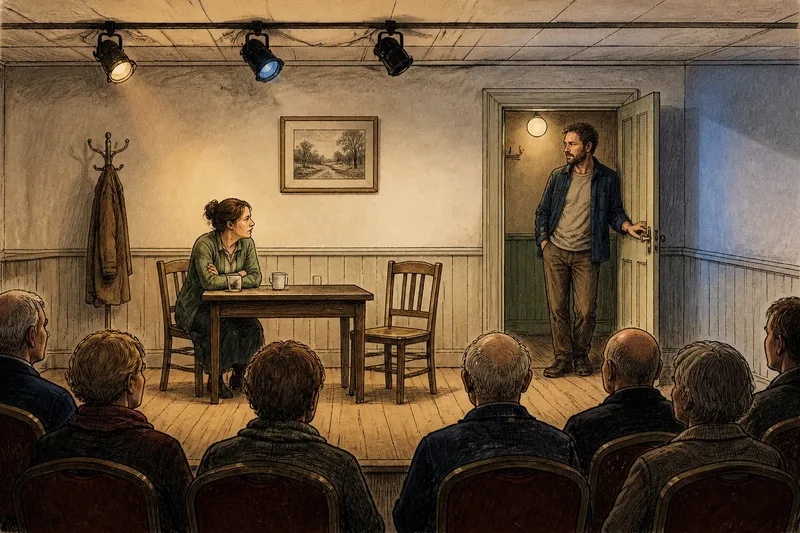
A single play can drag when its scenes repeat the same emotional beat or take too long to reach the central problem. The cause is often not the running time alone. It may be that characters explain what the audience already understands, or that entrances and exits keep interrupting the action without changing its direction.
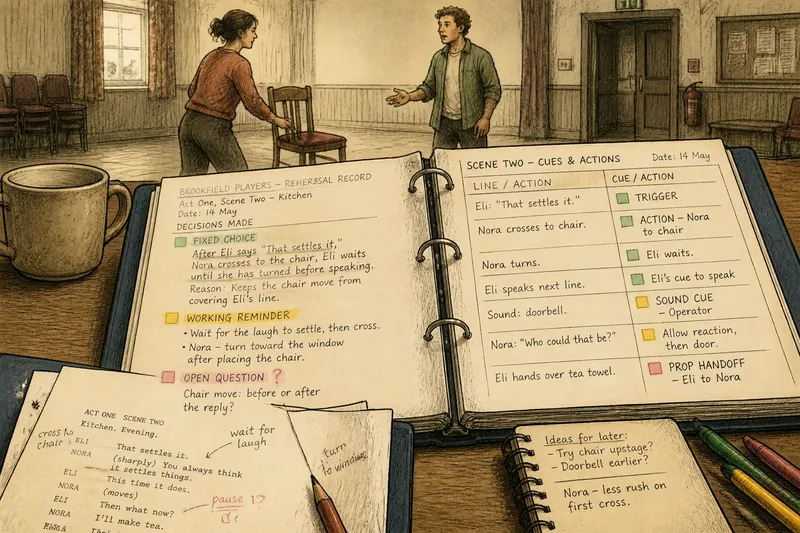
Try reading the script aloud with the prospective cast and mark each scene’s purpose in a few words: a secret emerges, a relationship shifts, a decision is made. If two scenes do the same job, discuss whether one can be shortened or removed with the director and rights holder. Avoid cutting a moment that makes the ending intelligible just to make the play feel brisk.
A variety bill can also feel long if every item has the same shape. Several spoken sketches in succession may blur together, even if each is amusing on its own. Alternate textures—such as a short comic scene, a song, and a brief reading—so the audience gets a change of pace without losing the thread of the evening.
Why does a mixed bill feel disconnected?
A variety bill does not need a plot, but it does need a reason to belong together. Without one, the audience may experience the evening as a collection of unrelated contributions, and performers may not know what tone the host should set. This usually happens when items are accepted individually but nobody takes responsibility for the whole running order.
Choose a light connecting idea that can hold different material without forcing every item into the same style. A local theme, a seasonal gathering or a shared question can help, provided it leaves room for contrast. A short welcome can explain the connection; long introductions tend to make each contribution wait for permission to begin.
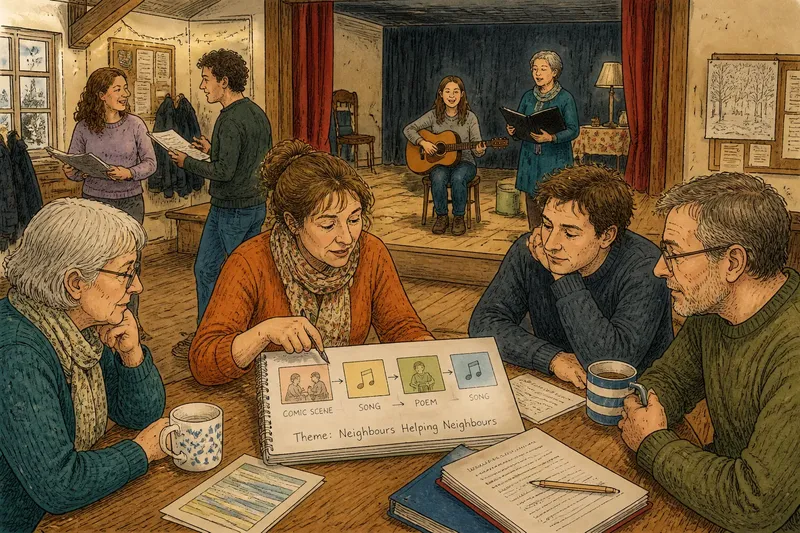
Imagine a village group preparing a winter fundraiser with a comic scene, two songs and a poem. The organiser notices that all the items concern neighbours helping one another, then places the quieter poem between the lively scene and the songs. The intended result is a bill with a recognisable thread and a pause in its energy, rather than four unrelated acts or one unbroken run of comedy.
Which format fits the performers and the rehearsal calendar?
A one-act play asks its cast to build a consistent set of relationships and sustain a shared world. That can suit a group that enjoys working closely on character and timing. It may be a poor fit if key performers have sharply different availability, because an absent cast member can make a scene rehearsal difficult to use.
A mixed bill can spread responsibility. A singer, a reader and a sketch cast may prepare their own pieces, with the director or producer coordinating transitions. That flexibility comes with a different demand: everyone still needs a shared run-through. Without it, changes in tone, entrances and handovers can become the evening’s most noticeable material.
Before choosing, list the people who are firmly available, the skills they want to use and the dates the group can rehearse together. Then compare that list with the form. If the cast is small and reliably present, a play may give their work a satisfying focus. If the group includes performers with varied strengths or limited overlapping time, a mixed bill may make better use of them—provided someone can bring the pieces into one coherent event.
What should you choose when the audience has come for different reasons?
Local audiences are not a single block. Some may be regular theatre-goers; others may have come with family, to support a neighbour, or because the hall is hosting a social evening. A story-led play gives people one clear experience to settle into. A variety bill offers more points of entry, but quick changes can feel less absorbing to anyone who has come hoping for a sustained story.
Ask what the event is meant to do before choosing the format. Is it a theatre night centred on a particular play, a club celebration, a fundraiser, or a community showcase? If the occasion is primarily a showcase, a bill can make room for more voices. If organisers want the audience to follow one relationship or dilemma, a play is usually the more direct choice.
Where the room includes children, older residents or people who may need an easy exit, consider the practical experience of sitting through the event. A clear interval can help with either format, but it should serve the evening rather than break up a short piece without purpose. Check the hall’s arrangements and the event’s access needs with the venue team.
How can you prevent awkward gaps and uneven pacing?
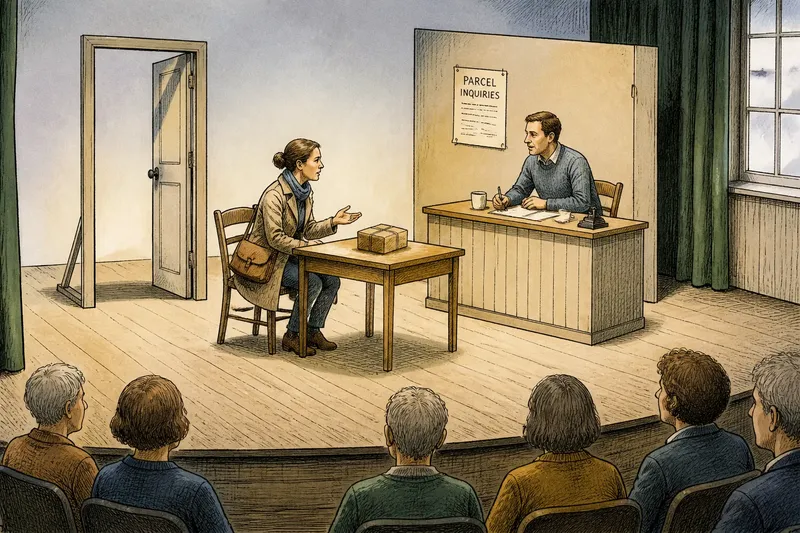
Transitions are the main scheduling pressure in a mixed bill. A microphone being moved, a music stand arriving or performers changing places can create pauses that feel longer than they are. In a one-act play, scene changes can cause the same problem if the script depends on a reset that the production has not planned.
Make a running order that includes entrances, exits, any change of furniture and the person responsible for each handover. Keep necessary props grouped and labelled, and agree who gives the next performer a clear cue. For a play, look for changes that can happen in view of the audience when they suit the style, rather than leaving the stage empty while the team works.
Do one full run in the intended order, with the actual host, props and sound cues. A rehearsal that skips transitions can conceal the very pauses the audience will notice. If a handover is uncertain, simplify it: remove an unnecessary item, keep a chair in place, or give one person clear responsibility for the cue.
Which questions help settle the choice?
Is a one-act play easier to rehearse?
It can be simpler to keep one script and one dramatic through-line, but the cast needs enough shared rehearsal to develop timing and relationships. A short script still needs focused work on its turning points and ending.
Can a variety bill include a serious piece?
Yes, a serious reading or song can sit beside comedy if the order gives the audience room to shift mood. Use the host’s brief introductions to make the transition clear, not to explain away the contrast.
How many different items should a mixed bill contain?
There is no fixed count that suits every group. Choose enough material to create variety, while leaving room for each item to register and for transitions to happen without rushing performers.
Can organisers combine a short play with other acts?
They can, if the play remains a clear centre of the evening and the surrounding items support its tone or provide a deliberate contrast. Place the play where the audience has the attention and energy to follow it.
What is the simplest way to make the decision?
Write one sentence describing the experience you want the audience to have, then ask which format makes that experience easier to create. “Follow one family’s difficult choice” points toward a play. “Meet several local performers in a lively community evening” points toward a bill. If the sentence needs both, decide which promise matters most and let the other format support it.
Then check the choice against the actual cast, rehearsal calendar, venue arrangements and event purpose. A one-act play works best when the group can sustain a shared story; a short variety bill works best when distinct contributions have a thoughtful order and a capable host. For a village hall audience, that practical match matters more than choosing the format that sounds grander on a poster.
Keep the programme description honest and specific. Tell people whether they are coming to one continuous story or a sequence of acts, and mention an interval if there is one. That small clarity helps the audience arrive with the right expectations—and gives performers a common sense of what the evening is meant to be.