Minimalist Theatre Set Design for Village-Hall Stages
Minimalist theatre set design helps a village-hall audience understand each scene with fewer props, simpler changes and more room for the action to breathe.
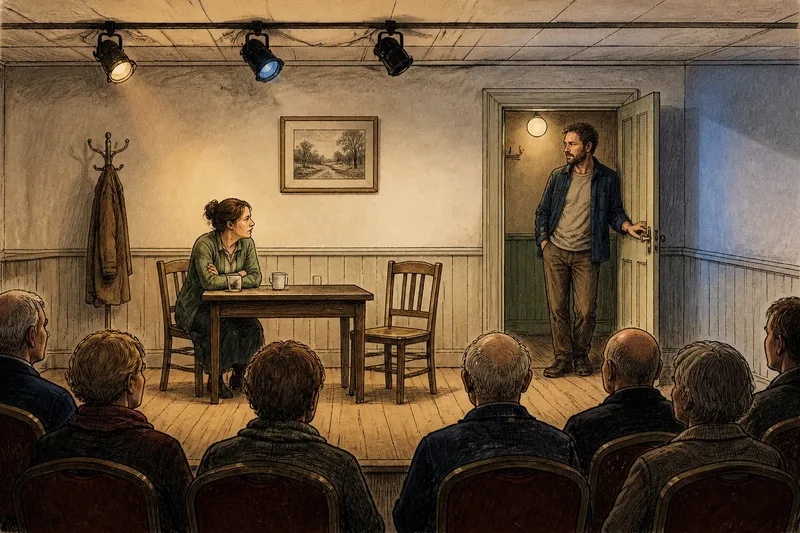
Minimalist theatre set design can make a village-hall scene easier to stage and follow by giving each object a clear job. A table, a chair and a lamp may establish a room more effectively than a full collection of furniture because the audience can focus on what the performers do with them.
Start with the scene’s needs, not a picture of a complete room. A kitchen may need a surface for making tea; a waiting room may need a reason for two people to sit apart. The right set provides those cues without asking a small stage or a volunteer crew to carry scenery the story never uses.
What does the audience need to know?
Write the essential spatial facts in plain language. Perhaps the scene takes place in a public waiting area, someone has prepared a room for a visitor, or a character must cross in front of others to leave. Each fact suggests a different visual cue.
A door can establish an entrance. A counter can distinguish a public office from a private room. A sign can identify a place when dialogue alone would leave the setting unclear. Choose cues that support the action rather than decorate it.
If the dialogue names the location, ask whether the audience needs more than that information. A realistic collection of matching objects may add little when the performers’ conversation is the scene’s focus.
When will one object do the job?
Choose one strong object when the setting is secondary and the performers’ behaviour carries the scene. A bench can suggest a bus stop, while a desk and two chairs can establish a meeting. The actors’ use of the object supplies much of the missing architecture.
This approach can also make scene changes easier. A portable table or chair can move between locations without requiring a full room reset. Give the object a clear relationship to the action: two people circling a table may turn it into a shared resource or a boundary without adding a complete dining room.
When does partial scenery clarify the action?
Use a partial room when the scene depends on a boundary, threshold or repeated movement. A doorframe matters if a character listens before entering. A counter can separate a clerk from a visitor, and a screen can conceal someone who is meant to be present but unseen.
A painted flat or freestanding frame can mark a boundary without enclosing the playing area. Keep construction within the venue’s approved setup. For overhead, load-bearing or otherwise safety-critical scenery, consult a qualified stage professional rather than improvising a support.
Partial scenery can leave performers room to move and give the crew fewer pieces to shift. Before adding a wall or frame, consider whether the scene’s entrances, exits and changes of position make sense without it. The best boundary is the one that helps the audience understand a character’s choice, not the one that most closely copies a building.
When is a detailed setting worth the effort?
A fuller setting may earn its place when the room itself drives the plot. Characters might search shelves, gather repeatedly around a table or use a cramped office to negotiate status. Objects that are handled, moved or discovered need a clear place in the scene.
Let the action determine the details. A stack of papers can make a desk active; a notice can identify an institution. Background pieces that nobody touches or refers to may add work for the crew without helping the audience understand the story.
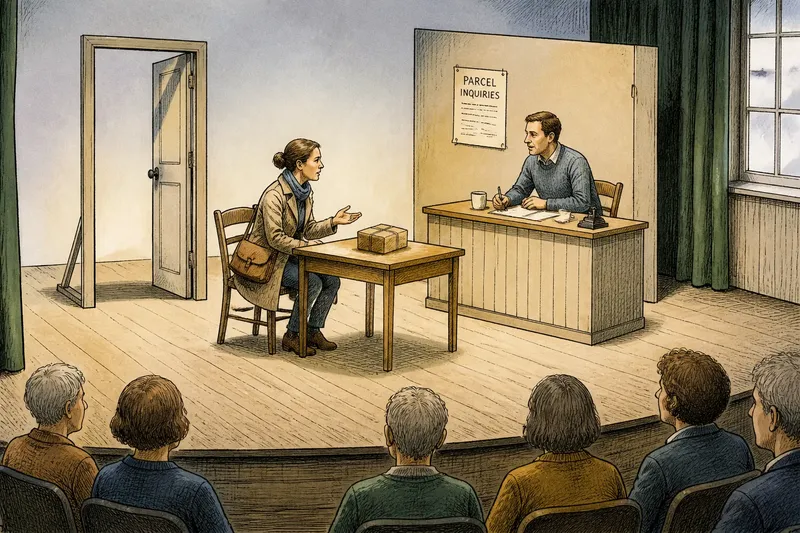
Say a village group is staging an invented scene in a post office. The visitor needs to ask about a parcel while the clerk keeps working. The group begins with only a table and chairs, adds a counter, one parcel and a notice, then rehearses the exchange. The expected result is a recognisable service desk where the parcel and conversation remain central; shelves and a wall clock stay imaginary because neither affects the scene.
Which set choice fits the scene?
- The location is named, but the action is intimate: Check whether a single chair or table gives performers something to use. If it does, keep that piece; if it competes with the conversation, remove it and rely on the dialogue.
- An entrance or concealed character matters: Check whether the audience can understand the threshold from the planned playing area. If the boundary clarifies the action, use a frame or screen; if not, stage the entrance without it.
- The play moves through several locations: Check whether a piece can serve more than one scene and be repositioned by the crew. If it can, reuse it with a changed arrangement; if it cannot, use a simpler cue such as a sign or actor-led transition.
- An object affects the plot: Check whether a performer handles, searches for or reveals it. If so, include it where the action requires it; if not, leave it out unless it supplies essential location information.
- The setting is unfamiliar to the audience: Check whether one clear cue, such as a counter or sign, identifies the place. If it does, stop adding generic decoration; if it does not, choose a more distinctive cue rather than several vague ones.
- The planned arrangement feels crowded: Check whether each piece serves a line, movement or reveal. If a piece has no such job, remove it and reassess the scene’s flow; if every piece is active, simplify the blocking or seek advice from the venue’s stage lead.
How can you tell whether a set cue earns its place?
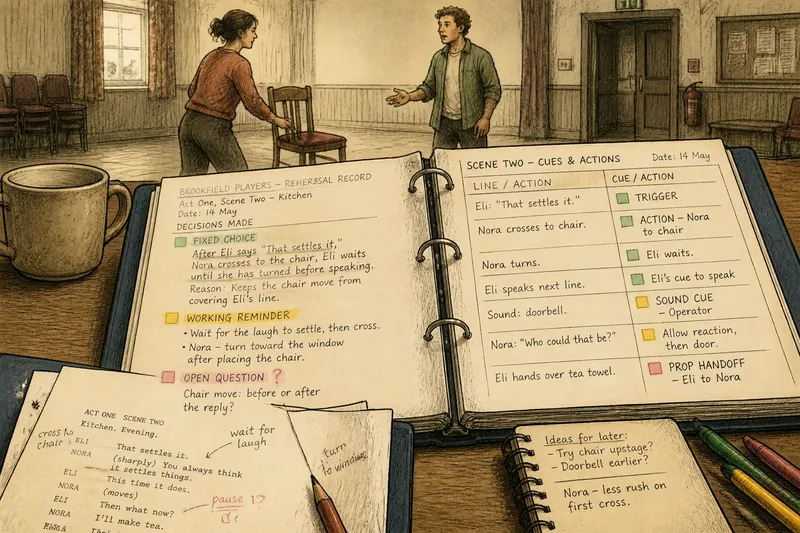
For each proposed item, ask what it tells the audience, whether a performer uses it and whether its meaning is clear in the scene. If the only answer is “it looks realistic,” consider leaving it out. If a prop drives a line or action, decide where it begins and how it is handled.
When a choice is uncertain, mark furniture positions with low-tack floor tape during rehearsal. Run the scene, then ask a few people watching from different parts of the hall what they understood about the location and the action. If the essentials are clear and performers can complete their movement, keep the simpler arrangement; if something remains confusing, add or reposition only the cue linked to that confusion.
What do people ask about minimalist theatre set design?
How do you know if a room is clear enough?
After a run-through, ask someone unfamiliar with the scene to name the place and describe what the performers were doing. If the answer fits the story, the set may already be doing its job; if not, identify the missing cue before adding scenery.
Should every scene use the same furniture?
Not necessarily. Keep a shared piece when it serves more than one location, then change its placement or use so the new scene reads clearly. A table can suggest a kitchen in one scene and an office in another if the staging distinguishes them.
What if the script lists many furnishings?
Sort the objects by whether they affect a line, movement or reveal. Keep the active objects when practical; if an item only describes the room, let dialogue and actor behaviour carry that detail.
Can lighting or sound suggest the room?
Yes, if the cue supports the scene without distracting from it. A change in light or a restrained sound can help signal a new location; if performers or dialogue become harder to follow, simplify the cue.
How can an empty space help the scene?
A bare wall or open corner is not unfinished scenery when the action remains clear. Empty space can give performers room to cross, make a single entrance more prominent or let the audience imagine parts of a home the production does not need to build.
Minimalist theatre set design is a choice, not a rule. A spare arrangement may suit a scene carried by dialogue, while a play built around searching a room may need more furnishings. Before building another wall or collecting another prop, name what the audience would miss without it. If the answer is specific, include the cue; if no part of the story depends on it, keep the space open and let the scene do its work.