A First Visit to an Outdoor Summer Performance
A first visit to an outdoor summer performance feels easier when you know what to bring, where to settle and how to enjoy the setting without missing the play.
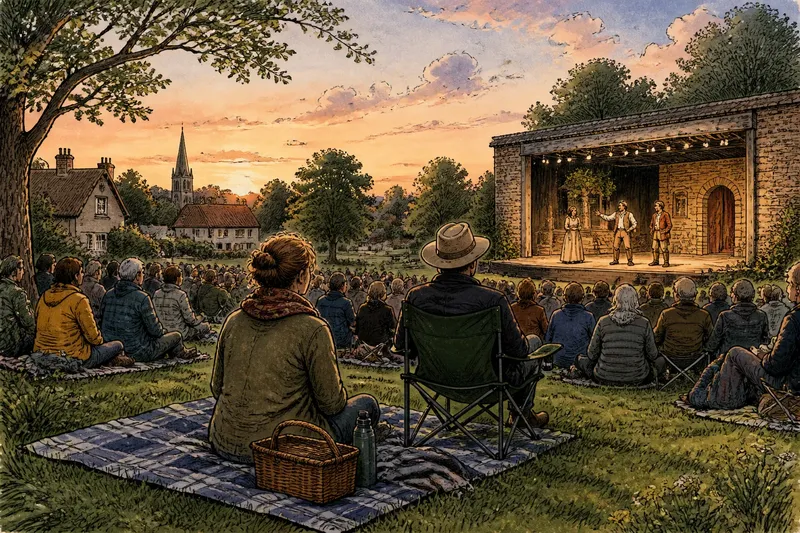
A first visit to an outdoor summer performance is easier when you treat the evening as theatre in a particular place, not a play with scenery you need to ignore. The stage may sit beside a village green, in a walled garden or against a barn; light, birdsong and passing clouds can all become part of what you notice.
You do not need special knowledge to enjoy it. A little preparation leaves you free to follow the performers and decide how much attention to give the surroundings.
What should you check before setting out?
Start with the venue’s own information. Look for the start time, the point where the audience gathers, and whether seating is provided or you should bring a folding chair or blanket. Some outdoor stages have a fixed view from each seat; others ask people to find a place on grass. These details affect what to pack and when to arrive.
Check the practical arrangements too: parking or public transport, toilets, food and drink rules, and what happens if weather turns poor. A small torch can help you find your way after dusk, but keep it off during the performance. Bring only what you can carry comfortably, and choose quiet packaging for any snack.
Dress for sitting still outside, not just for the temperature when you leave home. A light layer, shoes suited to uneven ground and a cushion can make a long evening more comfortable. If you use a mobility aid or need a particular access arrangement, contact the venue ahead of time so you can ask about paths, seating and facilities.
How do you settle in without making the evening a task?
Arriving with time to spare gives you a chance to see how the space works. Notice where the stage is, where other audience members are sitting and whether there is a clear route to the exit or facilities. Pick a spot that lets you see comfortably rather than chasing the most dramatic-looking view.
If seating is informal, think about the people behind you as well as your own comfort. A tall chair, a wide blanket or a late move into a crowded row can block someone’s sightline. Once you have settled, silence your phone and keep bright screens away; even a brief glow can pull attention from the stage.
Imagine you arrive at a village green with a blanket and a folding chair, and the front area is filling quickly. You choose a place a little farther back where the ground is level, then check that the chair does not obstruct anyone. The expected result is a clear view and a more relaxed start, without needing to keep shifting once the performance begins.
What is worth noticing while the play unfolds?
Give the performers your first attention. Follow who is speaking, what changes between characters and how the actors use the available space. Outdoor productions may be designed to carry voices across an open area, so a pause, gesture or turn toward the audience can matter as much as a detailed set.
Then let the setting enter your awareness without trying to interpret every distraction. A breeze might move a costume or a branch; birds may call between lines; the fading sky can alter the stage’s appearance. These details are not always planned, but they can shape the feeling of a scene. If something briefly draws your eye, return to the action when it passes.
Audience responses also travel differently outside. Laughter or applause may feel more exposed in an open space, and a quiet moment can include the sounds around you. There is no need to force a reaction or compare your response with other people’s. Listening closely is participation too.
How can you handle weather, interruptions and comfort?
Outdoor conditions can change during a show. Keep a warm layer close and make sensible choices about sun, rain and hydration before you sit down. If wind or a passing shower affects your comfort, follow the venue’s guidance and move only when it is safe and considerate to do so. Avoid opening a large umbrella if it would block the view behind you.
Small interruptions are part of sharing an open venue. A late arrival, rustling bag or distant sound may briefly break concentration. Resist the urge to turn each interruption into a separate event; bring your attention back to the performers. If you need to leave, use a route that avoids crossing the stage or blocking a group’s view where possible.
For children or anyone who may need a break, it helps to know where the nearest quiet place or exit is before the show starts. That is not a reason to sit on edge. It simply makes the outing feel less uncertain if someone becomes restless or needs fresh air.
Which small questions help you feel ready?
Should I bring my own chair?
Check the venue’s seating policy first. If a chair is allowed, choose one that feels stable on the surface and will not rise so high that it obstructs another person.
What should I wear to an outdoor performance?
Choose comfortable layers and footwear suited to the venue’s ground. A warm evening can cool after sunset, so a light extra layer is often useful.
What if I cannot hear every line?
Move closer only if the venue permits it and doing so will not disturb others. You can also focus on the performers’ movement and relationships, while asking staff about any access support available.
Is it all right to take photos?
Follow the venue’s and company’s rules, since photography can distract performers and audience members. If photos are allowed, take them before or after the show unless the instructions say otherwise.
How do you leave with the evening still in mind?
When the performance ends, allow a moment before packing up. You might notice how the same place feels after the last scene, or how the audience’s mood changes as people begin to talk. That pause can make the transition back to the car park or village path feel less abrupt.
Afterward, remember one choice you made that helped: arriving early, bringing a cushion or sitting where you could see clearly. Those details can guide your next first visit without turning it into a rigid routine. A first visit to an outdoor summer performance is most rewarding when you stay open to both parts of the event: the story the company brings and the particular evening the audience shares.